Samsung 55Q60T QLED
Customer: Bryanston, Sandton family lounge
Diagnosis: All 10 strips degraded after ~6 years, voltage clamping had tripped the driver into protection.
R2,350 · 3 days
Sound but no picture? Dim screen? Dark band across the panel? Nathtec's Gauteng workshop performs full LED strip replacement on every TV size from 32-inch to 85-inch - using brightness-matched OEM strips and a careful disassembly process that protects the panel.
Almost every flat-panel television sold in South Africa over the past 15 years uses some variation of an LCD panel illuminated from behind (or from the edges) by an array of LEDs. The LCD layer itself - the part that actually creates the image you see - is remarkably durable. It is the LED backlight behind it that is the most common point of failure on a modern TV, by a wide margin. Across our Gauteng workshop, backlight repair is the single most-frequent service we perform on the brand families we work with - typically accounting for 30-35 percent of all hardware repairs.
The reasons are physics and economics. LEDs are not perpetual-motion machines - each one is a tiny semiconductor junction operated at a regulated forward current, and over thousands of operational hours that junction slowly degrades. Cheaper-tier TVs use higher-stress LED configurations to hit a price point, accelerating that wear. South African mains conditions - the load-shedding cycles, the surges, the brown-outs - add additional electrical stress on the LED driver circuit. A backlight specified for 50,000 hours in stable-mains markets routinely fails at 20,000-30,000 hours in Gauteng.
The very good news: backlight repair is fully economical on practically every panel size 43 inches and larger, restores the TV to full factory brightness, and adds another 6-10 years of useful life. This page explains how the repair works, what realistic Rand pricing looks like by panel size, and how to confirm - with a simple 10-second torch test - that backlight failure is actually your problem.
Follow the steps below in order. Each one rules out a different cause.
If the TV powers on (standby LED changes colour, boot chime plays, sound is audible) but the screen stays black, the power board and main board are likely fine. Move to step 2. If there's no sound or no standby light, see our power supply repair page first.
Switch the TV on. Shine a bright torch (phone flashlight works) onto the dark screen at a sharp angle, close to the surface. Move it slowly. If you can see a faint image, menus or moving content - your backlight has failed. The LCD is still producing the picture, it's just not lit. This single test correctly diagnoses backlight failure 95 percent of the time.
If a torch reveals an image, look at the pattern when the TV is in normal mode. Completely dark screen = all strips failed or the driver circuit has tripped. Dark band across the middle / top / bottom = one or two adjacent strips failed. Dim but visible picture = strips degraded but still working. Mottled or patchy = multiple isolated failures.
Take a quick photo of the torch test (with the menu visible faintly) and WhatsApp it to 078 721 3551 along with the TV brand, model and size. We come back with a specific repair quote within minutes during business hours, based on the exact strip configuration your panel uses.
Backlight repair is priced primarily by panel size and strip configuration. Below is what realistic Rand pricing looks like in Gauteng today.
| Panel Size | Typical Strip Count | Backlight Type | Price (ZAR) |
|---|---|---|---|
| 32 inch | 3 - 4 strips | Edge-lit | R1,450 - R1,650 |
| 40 - 43 inch | 4 - 6 strips | Edge-lit / direct-lit | R1,450 - R2,400 |
| 50 inch | 5 - 8 strips | Direct-lit | R1,800 - R2,300 |
| 55 inch | 6 - 10 strips | Direct-lit / FALD | R2,200 - R3,100 |
| 65 inch | 10 - 14 strips | Direct-lit / FALD | R2,400 - R3,800 |
| 75 inch | 12 - 18 strips | FALD / Mini-LED | R2,900 - R4,500 |
| 85 inch | 16 - 24 strips | FALD / Mini-LED | R3,400 - R5,400 |
Pricing disclaimer: Please note that all prices displayed are estimated starting prices only. Final repair costs may vary depending on the TV size, model, fault diagnosis, parts required, labour, and any additional repairs needed after inspection.
Customer: Bryanston, Sandton family lounge
Diagnosis: All 10 strips degraded after ~6 years, voltage clamping had tripped the driver into protection.
R2,350 · 3 days
Customer: Pretoria East home cinema
Diagnosis: Three centre strips dead. Full set replaced for uniformity, not just the failed three.
R2,750 · 4 days
Customer: Soweto family lounge
Diagnosis: All 6 strips degraded but still working at ~30% brightness. Classic ageing pattern.
R1,650 · 3 days
Customer: Midrand home cinema
Diagnosis: Five strips from different zones had failed - typical multi-point ageing pattern.
R3,400 · 5 days
Panel Specialists
"TV backlight work is unforgiving. The LCD layer behind the diffuser is fragile glass less than 1mm thick, and one wrong move in disassembly can crack it. That's why we don't rush this work - every backlight job in our workshop is laid out on a clean ESD bench, the panel is supported flat, and the diffuser, light-guide and reflective layers are removed in the correct order with the correct tools. The actual strip soldering is the easy part. The careful handling is where the experience matters."
Lerato has been performing panel-level repairs at Nathtec for 11 years. She has personally replaced backlight assemblies on more than 1,800 TVs across every brand sold in South Africa, from 32-inch Hisense entry-level LEDs to 85-inch Samsung Neo QLEDs with full-array Mini-LED backlighting. Her work is signed off on every backlight repair that leaves our Gauteng workshop.
Backlight repairs are not all created equal. Here is what makes ours last 6-10 years instead of 6-10 months.
We source strips with the same LED count, forward voltage and luminous flux as your original - not generic strips of approximately the right size. Uniformity matters.
We replace the full strip set, not just the dead ones. Mixing old and new strips creates brightness banding within months. This is the single biggest mistake bargain repairers make.
After replacement we set the LED driver current to the original panel design spec - not the maximum the driver will deliver. Over-driving is what kills cheap backlight repairs.
Every strip's aluminium backing is verified for good thermal contact with the panel chassis before reassembly. Bad thermal contact is the second biggest cause of premature LED failure.
Every backlight repair runs a 4-6 hour burn-in cycle before collection. If anything is going to fail prematurely, it fails in our workshop, not in your lounge.
If a strip fails within 90 days, we re-repair at no cost. We are confident enough in our work to make that promise on every backlight job.
The torch test is the fastest, most reliable diagnostic. Switch the TV on, shine a bright torch onto the dark screen at a sharp angle and look closely. If you can see a faint image, menus or moving content, the LCD panel is working but the backlight has failed. This single test correctly identifies backlight failure in about 95 percent of cases. The other 5 percent are usually T-Con board faults or backlight driver IC failures - both of which we also repair.
Backlight repair is priced primarily by panel size. 32 to 43 inch typically R1,450-R2,400, 50 to 55 inch R1,800-R3,100, 65 to 75 inch R2,400-R4,500, and 75 to 85 inch R3,000-R5,400. Full-array local-dimming (FALD) and Mini-LED panels are priced at the upper end of those ranges due to additional strip count and zone-driver complexity. We provide a free written quote once we have the exact model and a torch-test photo.
In about 80 percent of cases, sound-but-no-picture is caused by failed LED backlight strips. The picture is still being generated by the LCD layer in front of the strips, but you cannot see it because the strips behind the panel have died. The remaining cases are usually T-Con board faults (different repair, similar price), backlight driver IC failures or, very rarely, a panel-internal fault. The torch test distinguishes between them in 10 seconds.
Modern TV LED backlights are rated for 30,000 to 50,000 operational hours - in real-world South African use that translates to roughly 4 to 8 years of typical household viewing. Load-shedding cycles, mains surges and brown-outs tend to shorten that lifespan by 1 to 3 years. Once one or two strips start failing, others usually follow within months because they share the same operational age and driver circuit.
We strongly recommend full-set replacement. The remaining original strips have the same operational hours, the same heat exposure and the same driver-current history - so they are statistically very likely to fail within months of a partial replacement, requiring another teardown. Full-set replacement also guarantees consistent brightness, colour temperature and uniformity across the panel. The cost difference between partial and full is small and the long-term outcome is dramatically better.
Yes. A dark band, dark patch or persistent shadow on bright scenes almost always indicates that one or two LED strips behind that specific area of the panel have failed. This is a routine backlight repair. The panel is opened, the failed strips identified by their unlit segments, and the full set replaced with brightness-matched OEM equivalents. If the band is sharply defined and follows the LCD grid (rather than the LED grid), the cause is usually a T-Con or LVDS fault rather than the backlight.
For TVs less than 8 years old and 43 inches or larger, backlight repair almost always makes financial sense - the repair cost is typically 15 to 25 percent of the replacement cost, and the repaired TV gives you another 6 to 10 years of useful life. For older 32-inch and 40-inch sets where the repair cost approaches the replacement value, we give honest guidance on whether it makes sense to proceed. We never recommend a repair that doesn't add up financially.
Most backlight repairs are completed within 2 to 4 working days of the TV arriving at our Gauteng workshop. The work involves careful panel disassembly, removal of the diffuser and light-guide layers, desoldering and replacement of the failed strips, panel reassembly, driver-current re-calibration and a 4-6 hour burn-in test. Larger 65-inch and 75-inch panels typically add a day to the schedule. Mini-LED and FALD panels with high zone counts can take up to 5 days.
If you have searched for TV backlight repair Gauteng, TV no picture but sound fix, LED strip replacement Johannesburg or dark TV screen repair, this guide explains exactly what is happening inside your television and how a professional backlight repair restores it to full factory brightness. The information here is based on more than 1,800 backlight repairs completed in our Gauteng workshop across every major brand and panel size sold in South Africa.
Every flat-panel television (with the partial exception of OLED, which is self-emissive) consists of two distinct layers: an LCD layer that creates the image by selectively blocking or allowing light through millions of tiny shutter cells, and a backlight that provides the actual light shining through those shutters. The LCD layer is what you see when you look at the screen, but the LCD itself produces no light of its own. Without the backlight, the whole picture is dark.
Modern LED-backlit TVs use one of three backlight configurations. Edge-lit panels (typically 32-inch and 40-inch entry-level sets) place LED strips along one or two edges of the panel, with a light-guide layer distributing the light across the screen. Direct-lit panels place LED strips in rows across the back of the panel, providing more uniform illumination and better contrast. Full-array local dimming (FALD) and Mini-LED panels add zone-by-zone backlight control, with hundreds or thousands of independently-driven LED zones that can dim dark areas of the picture for HDR.
When any of these backlight configurations starts to fail, the LCD layer keeps doing its job perfectly - the picture is still there, it just isn't lit. That is why the torch test works so reliably: you are using an external light source to illuminate the LCD layer the same way the failed backlight should have done.
The 30,000 to 50,000 operational-hour lifespan that LED manufacturers quote for their products is measured under laboratory conditions: stable mains voltage, controlled ambient temperature, gentle current ramping at switch-on. Real-world South African conditions are considerably harsher. Load-shedding cycles repeatedly cold-start the LEDs from a hard power-cut, stressing the solder joints and the LED dies themselves. Mains surges after a power restoration can briefly over-drive the backlight current beyond design limits. Heat build-up in poorly-ventilated wall-mount installations adds 5-15 degrees C to operational temperature, which roughly halves expected LED lifespan for every 10 degrees C above the design point.
The cumulative effect is that a TV backlight rated for 8-10 years of life in Europe routinely fails at 4-6 years in Gauteng. This is not a brand-specific issue - we see the same pattern across Samsung, LG, Sony, Hisense, TCL, Skyworth and Panasonic panels. It is a market-specific consequence of the electricity supply we all live with.
The work of replacing TV backlight strips is methodical and careful, and the bulk of the time is spent on preparation and verification rather than on the soldering itself. Here is how a typical job goes through our workshop. First, full diagnosis - voltage rails confirmed, T-Con and backlight driver verified working, torch test photographed for the record. Second, panel disassembly - the TV laid face-down on a panel jig, back cover removed, main board and power board carefully disconnected, panel chassis lifted from the bezel.
Third, LCD separation - this is the moment that requires the most care. The LCD glass layer is separated from the backlight chassis, supported on a clean cloth-lined panel jig, and set aside. Fourth, diffuser and light-guide removal - the optical layers are carefully lifted out in the correct order and labelled. Fifth, strip swap - the old strips are removed from the aluminium chassis, the chassis cleaned, and the new brightness-matched strips fitted. Sixth, reassembly in reverse order, careful electrical reconnection and the final burn-in test at full brightness for 4-6 hours before the TV is signed off and made ready for collection.
One of the most common questions we get is whether we use original OEM strips or generic equivalents. Our policy is to use strips with the same LED count, same forward voltage, same luminous flux and same physical dimensions as the original - either genuine OEM where available or premium-tier OEM-equivalent where the brand no longer sells parts to the independent repair channel. We never use the cheap generic kits sold through Gauteng grey-market component shops, because their LED specifications drift significantly from the original panel design.
Mixing original strips with cheap generics is the single biggest cause of backlight repairs that fail within a year. The driver pushes the same current through both, but the generics can't handle it, fail early, then drag the original strips down with them through driver-protection cycling. Our full-set OEM-equivalent replacement avoids this entirely and is the reason our backlight repairs typically last another 6-10 years.
Backlight repair is workshop-based work - the careful disassembly and panel handling cannot reasonably be done in a customer's home. We collect from and deliver to Johannesburg, Sandton, Pretoria, Midrand, Randburg and Soweto as part of our standard service. Drop-offs at the workshop are also welcome - call ahead to arrange a slot.
For brand-specific backlight knowledge see our pages on Samsung TV repair (Crystal UHD and QLED backlight quirks), LG TV repair (NanoCell direct-lit panels), Sony TV repair (XR Backlight Master Drive), Hisense TV repair (ULED FALD), TCL TV repair (Mini-LED), Skyworth TV repair and Panasonic TV repair. For related services see motherboard repair, power supply repair, LED TV repair, QLED TV repair and TV screen repair. Pricing across all categories is detailed in our TV repair cost guide, and full symptom guidance lives on our common TV problems page.
The fastest start is a WhatsApp to 078 721 3551 with the TV brand, model and size, a quick photo of the torch test (the faint menu visible through the dark screen) and the area you're in. We typically come back within minutes during business hours with a likely diagnosis, a transparent price range and the next step. Free written quote, no-fix-no-fee on minor faults, 90-day workmanship warranty - those terms apply to every backlight repair that leaves our Gauteng workshop.
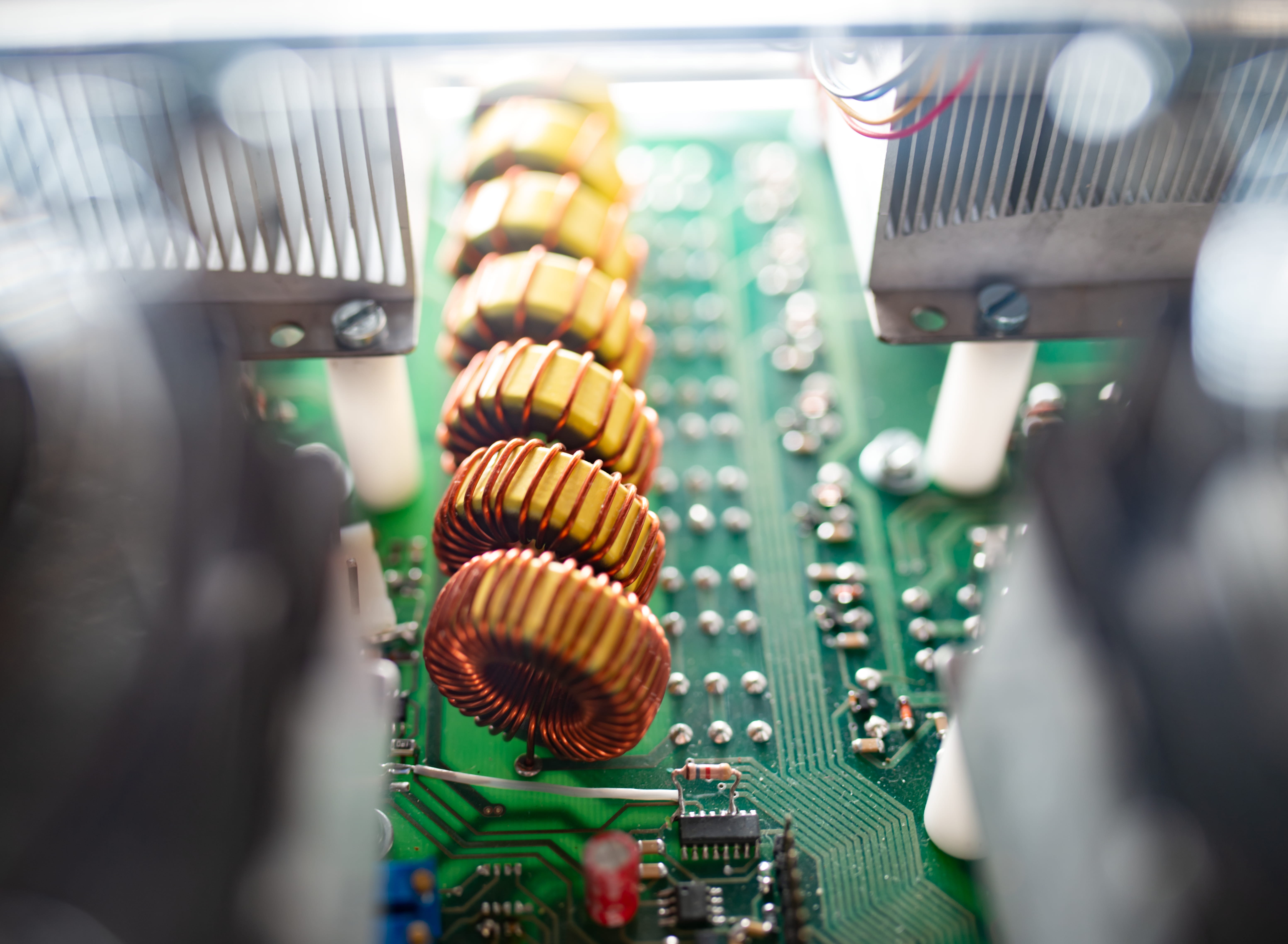
From the moment we collect your TV to the moment you turn it back on at full brightness, you are dealing with the most experienced backlight repair team in Gauteng. Send the model and a torch-test photo - we'll come back with a free transparent quote.