Common TV Problems We Fix Every Day in Gauteng
From a TV that won't turn on to flickering screens, lines on the display, HDMI faults and dead backlights — we diagnose and repair every common television problem across Johannesburg, Pretoria, Sandton, Midrand, Randburg and Soweto.
Describe Your TV Problem
Tell us what's happening and we'll send a likely cause and price guide back via WhatsApp.
Every Common TV Fault, Explained Plainly
A modern television is essentially a high-resolution computer with a delicate light-emitting panel attached. When something goes wrong, the symptoms can be confusing — but the underlying causes are almost always one of a familiar handful of failures. Below is the complete list of TV problems we resolve every day in our Gauteng workshop, what causes each one, and how we put them right.
TV Not Turning On
A television that refuses to power on is the single most common fault we encounter every week across Gauteng. When the standby light is completely dead, the problem is almost certainly inside the power-supply board — usually a swollen capacitor, a blown fuse, a failed bridge rectifier, or a burnt-out MOSFET. When the standby light glows but the panel never comes alive, the fault may be on the main board, in firmware, or with a faulty inverter.
Why Power Boards Fail in South Africa
South African mains conditions are not kind to modern televisions. Frequent load shedding, voltage surges, and brief brown-outs hammer the input stage of the power-supply board. Over time the electrolytic capacitors lose capacity, lose tolerance and eventually bulge. Once a capacitor swells, the supply voltage becomes unstable and the TV stops booting. Most affordable repairs we complete are precisely this — component-level capacitor replacement that restores a perfectly healthy TV for a fraction of replacement cost.
What the Standby Light Tells Us
Most manufacturers encode fault codes into the standby light blink pattern. A slow, steady blink usually means a power-rail fault. A fast blink often means a backlight protection trip or main-board error. Brand-specific codes (such as Samsung's 4-blink, 6-blink or 10-blink patterns) tell us exactly which subsystem has failed. Always count the blinks before you call — it speeds up diagnosis enormously.
No Picture But Sound Works
If you can hear the channel, the menu beeps, or your streaming app audio, but the screen is completely black, the fault is between the main board and the panel. The two most common causes are backlight failure (the panel itself is fine, but the LEDs that illuminate it have died) and a faulty T-Con board (the timing controller that drives the panel's image data has failed).
The Torchlight Test
Here's a quick test you can do yourself: shine a bright torch (or your phone flashlight) close to the screen while the TV is on. If you can faintly see a ghostly image, you have a backlight failure — a routine repair where we replace the LED strips. If the screen is genuinely empty with no image visible at all, the fault is most likely the T-Con board, the LVDS ribbon, or the main board itself. Either way, it is repairable.
LVDS Cable and T-Con Faults
The LVDS ribbon is the thin flat cable carrying image data from the main board to the T-Con. Vibration, dust ingress and corrosion can cause intermittent contact, producing flashes of picture or a momentary working image. Reseating the LVDS connector resolves a surprising number of cases. When the T-Con itself is bad, replacement with a matched-model board restores the picture immediately.
TV Screen Flickering
Flickering ranges from a subtle, irritating pulse to violent strobing that makes the TV unwatchable. The cause is almost always electrical instability — either inside the TV or coming from the household mains. Failing capacitors on the power-supply board are the most common culprit, followed by a degrading backlight driver stage.
Power Board Capacitor Replacement
When a power capacitor begins to fail, it stops storing enough charge between mains cycles. This causes the rail voltages feeding the backlight and main board to dip, producing visible flickering. We test every electrolytic capacitor with an ESR meter, replace any that read out of specification, and the flicker disappears permanently. This is typically a R720 to R1,700 repair.
Backlight Driver Issues
On larger panels (55 inches and up), the LED backlight has its own dedicated driver IC. When this IC starts to fail it produces brightness pulses or zone-flickering on Mini-LED and full-array sets. We replace the driver chip and verify the current waveform on an oscilloscope before reassembly.
Lines on Screen — Vertical and Horizontal
Sudden lines down or across the picture are alarming, but they are very rarely a sign that the TV is finished. The overwhelming majority of line faults trace back to either the T-Con board, a loose ribbon cable between the T-Con and the panel, or partial panel-row driver failure.
Ribbon Cable Reseating
Inside every flat-panel TV are several ZIF (zero-insertion-force) ribbon connectors carrying signal between the T-Con and the panel's driver ICs. Temperature cycling and humidity can cause these connectors to oxidise, producing thin vertical lines, blocks of colour, or half-screen failure. Carefully disconnecting, cleaning and reseating the ribbon often clears the fault completely — a low-cost repair.
T-Con Replacement vs Panel Replacement
If reseating the ribbons doesn't resolve the lines, the T-Con itself is usually the next step. We source compatible T-Con boards for all major brands and sizes. When line faults persist even after T-Con replacement, the panel's internal row drivers may be at fault — at that point we provide an honest assessment of whether replacement makes economic sense.
No Signal / HDMI Issues
HDMI ports take more abuse than any other connector on a television. Every time you plug in a console, swap a soundbar or insert a streaming stick, you stress the solder joints holding the port to the main board. Eventually those joints crack, the port loosens, or a pin bends. Symptoms include "No Signal" messages, intermittent picture, audio without video, or no response at all on one HDMI input.
HDMI Port Replacement
We desolder the damaged HDMI socket using a hot-air rework station, clean the pads, and fit a new genuine HDMI port. We then test all four data lanes, HDMI-CEC and HDMI-ARC for proper signal handshake. Most HDMI port repairs are completed inside two hours and cost between R780 and R1,700 depending on board complexity.
HDMI-ARC and eARC Handshake Failures
If your soundbar suddenly stops getting audio from the TV via HDMI-ARC, the fault could be in the HDMI-CEC handshake logic on the main board, the firmware, or the ARC channel itself. We re-flash the firmware, test the CEC line and verify the eARC negotiation with a protocol analyser. Most cases resolve without any hardware swap.
Power Light Blinking
A blinking standby light is the TV's way of telling you something specific has gone wrong. Each manufacturer uses its own code, but the principle is universal: count the blinks, note the pause, repeat. Samsung typically uses 4, 5, 6 or 10-blink patterns. LG uses a similar coded system. Sony uses a colour-changing LED in some models.
Firmware Corruption
A surprising number of blinking-light cases turn out to be corrupt firmware — particularly after a power surge during a software update. We use brand-specific service programmers to re-flash the original firmware via the J-TAG or service port, restoring the TV to a known-good state. This is often a same-day fix with no hardware replacement required.
Capacitor and Voltage Faults
When firmware is fine, the next cause is usually low or unstable voltage on one of the main rails. We measure 5V, 12V and 24V rails against the schematic, replace any out-of-spec capacitors or regulators, and the standby light returns to normal solid behaviour.
Backlight Failure
Backlight failure is one of the most common reasons people think their TV is dead — when in fact only the LEDs behind the panel have stopped working. The picture is still there, the TV is still working, but you cannot see anything because the panel is no longer illuminated. The torchlight test (described above) is the quickest way to confirm.
LED Strip Replacement
Replacing the LED strips inside a panel is one of the most technical repairs we perform. The screen must be partially or fully disassembled, the diffuser and light-guide carefully removed, the failed strips desoldered and the new strips fitted with brightness-matched OEM LEDs. After reassembly we calibrate the backlight current to factory specification. Total repair time is usually 4 to 8 hours.
Cost and Lifespan
Backlight repair typically costs between R1,800 and R4,200 depending on panel size and brand. With genuine OEM strips, you should expect another 6 to 10 years of normal use before any further backlight degradation. Compared with replacing a 65-inch panel, this is a no-brainer.
Motherboard Failure
The main board (sometimes called the motherboard) is the brain of the TV — handling video processing, audio decoding, smart TV functions, network connectivity, HDMI switching and user-interface logic. When the main board fails, symptoms can range from total no-boot to weird software behaviour, missing apps, distorted picture or complete loss of one input source.
Component-Level Repair
Rather than swapping the whole board at significant cost, our technicians perform component-level diagnostics: we trace the fault to a specific IC, capacitor, resistor or trace. EEPROM corruption is particularly common after surges — we re-flash the EEPROM with the correct binary for that exact panel and model, restoring full function. Component repair is typically 40 to 60 percent cheaper than whole-board replacement.
OEM Board Replacement
When component repair isn't viable (severely burnt board, multiple-layer damage, missing critical ICs), we source a genuine OEM replacement board, transfer the EEPROM data and reprogram the panel-specific calibration. The TV returns to factory behaviour exactly as designed.
No Sound or Distorted Audio
Audio faults are usually one of three things: blown speakers, a failed audio amplifier IC, or HDMI-ARC negotiation problems. We diagnose by feeding a known good signal through each source, listening on the internal speakers and via every output (HDMI-ARC, optical, headphone) to isolate where the audio chain is breaking.
Speaker and Amplifier IC Replacement
Internal TV speakers are surprisingly delicate — the small cone-and-voice-coil assemblies can fail from overuse, moisture or simple age. We test each speaker independently and replace any with measurable damage. When the speakers test fine but there is still no sound, the audio amplifier IC (usually a Class-D chip near the speaker outputs) is the next suspect. We replace it and the sound returns to full crystal clarity.
Bluetooth and Soundbar Pairing
Modern smart TVs often pair via Bluetooth with external speakers. When that pairing fails, the Bluetooth module needs reset or firmware refresh. We restore the pairing logic and verify the audio output across all sources.
Wi-Fi and Smart TV Issues
Smart TV connectivity problems are now one of the top three reasons customers bring TVs to us. The internet was once an optional extra — now it's central to how families use their televisions, streaming Netflix, Showmax, YouTube, DStv Stream and more. When the Wi-Fi stops working, the whole TV becomes much less useful.
Firmware Re-Flash
The single most effective fix for smart TV Wi-Fi issues is a firmware re-flash. Over months and years of automatic updates, the firmware can become subtly corrupted — particularly if the TV is powered off during an update. We perform a clean factory re-flash using the original manufacturer firmware, and full Wi-Fi function almost always returns.
Wi-Fi Module Replacement
When firmware doesn't resolve the issue, the Wi-Fi/Bluetooth combo module itself may have failed. These modules are typically plug-in cards inside the TV, and a direct replacement with a brand-matched module solves the problem permanently.
TV Keeps Restarting
Boot-loop — where the TV powers on, shows the logo, then powers off and tries again — is one of the most frustrating faults for customers. The TV is alive but never finishes booting. Causes are usually firmware corruption, an EEPROM error, a marginal capacitor causing voltage dips during the boot sequence, or in some cases a backlight protection circuit tripping during the high-current backlight switch-on.
Firmware Recovery
If the TV gets past the logo before resetting, the firmware is partially intact and a re-flash via the service port usually resolves the loop. We use brand-specific service tools (Samsung SVC, LG GSP, Sony Service Mode, TCL Engineering Mode) to perform the recovery.
Capacitor Replacement
If the TV doesn't get as far as the logo, the boot sequence is being interrupted by a power dip. We test the rails during the boot sequence, identify the failing capacitor and replace it with a matched OEM equivalent. The boot loop disappears for good.
Cracked or Damaged Screen
A cracked panel is, unfortunately, the one fault where we have to be most realistic with customers. The panel itself is the single most expensive component in a modern TV — typically 60 to 80 percent of the original purchase price. When the panel is cracked or shattered, replacement may not always be economical.
Honest Assessment
We give you a transparent quote covering: panel cost, labour, calibration and warranty. We then compare against the cost of a new TV. If the repair is more than 60 to 70 percent of replacement cost on a TV older than 5 years, we'll tell you straight up that replacement is the better choice. We'll never push a repair that doesn't make sense for you.
Partial Damage and Pressure Spots
Pressure spots, blooms, or small impact damage that hasn't fully cracked the panel can sometimes be salvageable through panel-driver compensation or partial replacement. We assess every case individually before quoting.
When to Repair vs When to Replace
The single most important question for any TV owner facing a fault is whether to repair or buy new. There is no universal answer — but there is a clear rule of thumb. Compare the quoted repair cost to the cost of an equivalent replacement TV, and consider the age of the existing set.
Quick Decision Guide
- Repair under R1,800: Almost always worth fixing, regardless of TV age.
- Repair R1,800–R4,200 on a TV under 6 years old: Strongly recommend repair.
- Repair over R4,000 on a TV over 7 years old: Consider replacement.
- Cracked panel on any TV: Get our honest assessment first.
Why Modern TVs Are Worth Repairing
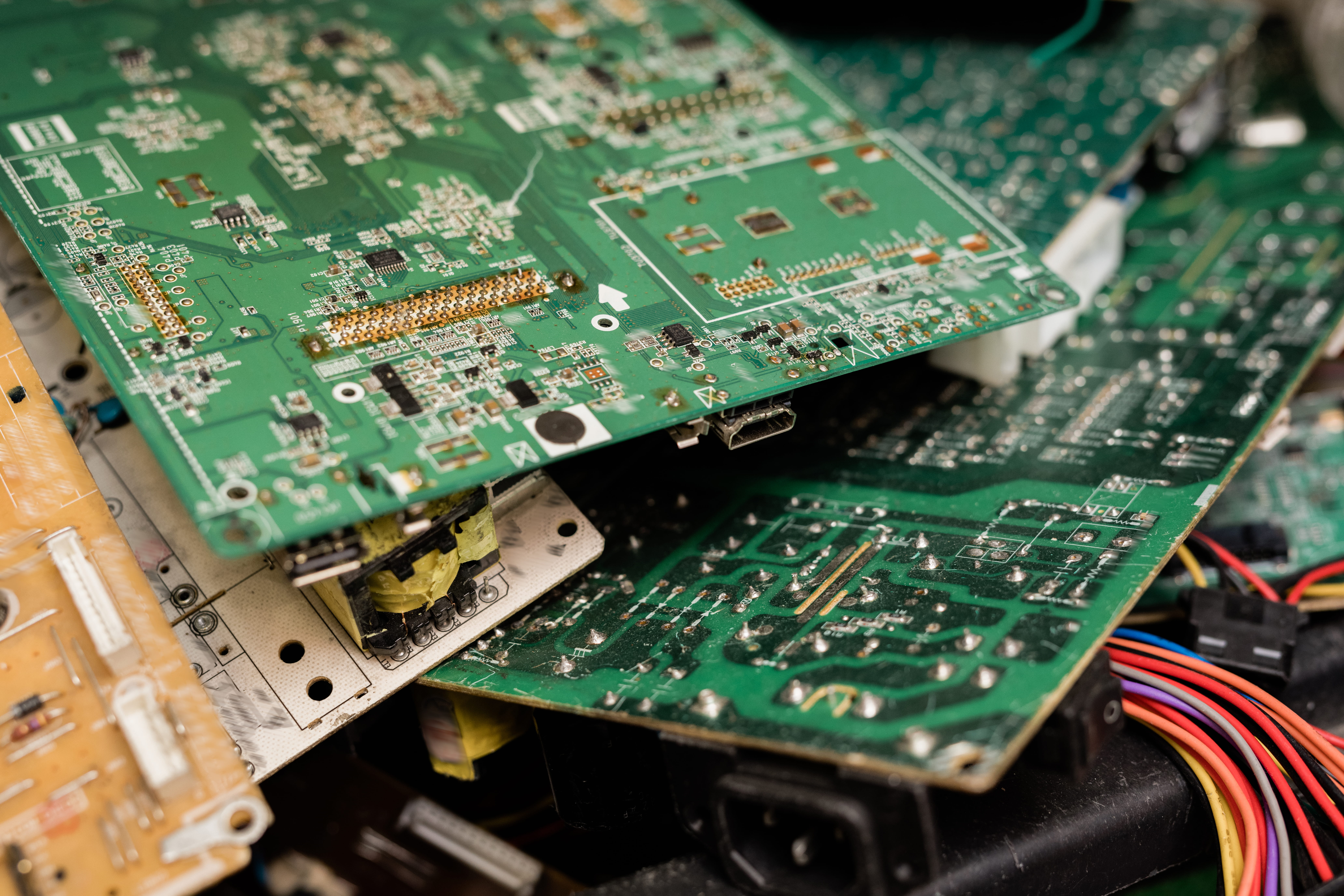
Five years ago, year-on-year TV improvements were significant. Today, the rate of progress has slowed — a four-year-old QLED or OLED still delivers excellent picture quality compared to the latest model. That means a repair that gives you another 4 to 6 years of use is almost always better value than buying new. Add to that the environmental cost of e-waste, and repair becomes the obvious choice for most faults.
Same-Day Diagnosis Availability
One of the questions we are asked most often is: "How quickly can you tell me what's wrong?" The answer for the vast majority of faults is the same day. Our Gauteng workshop holds spare parts inventory for Samsung, LG, Sony, Hisense, TCL, Skyworth and Panasonic — covering power boards, T-Con boards, capacitors, HDMI ports, Wi-Fi modules, common LED strips and main-board components.
For in-home calls within Johannesburg, Sandton, Midrand, Pretoria, Randburg and Soweto, our mobile workshop allows us to diagnose and frequently repair on the same visit. For drop-offs at our Gauteng workshop, most TVs leave the same day or by close of business the next day. Complex board-level repairs occasionally extend to 48 hours where parts must be sourced.
Every Major TV Brand. Every Common Fault.
We resolve every problem on this page across every major brand sold in South Africa. Click your brand for brand-specific repair details.
Same-Day Fault Diagnosis Across Gauteng
Wherever you are in the province, a Nathtec technician is within reach. We service every major suburb, city and township in Gauteng.
Not seeing your suburb? We cover the entire Gauteng province. Call 078 721 3551 to confirm.
Common TV Problem Questions, Answered.
Quick answers to the questions Gauteng TV owners ask us most often about common faults.
A TV that refuses to turn on usually has a failed power supply board, a swollen capacitor, a blown fuse or a corrupt firmware state. If the standby light is completely dead, the fault is typically on the power board. If the standby light blinks rapidly, it could be a main-board or firmware issue. We diagnose both within 30 minutes and most are same-day repairs.
Sound with no picture nearly always points to a backlight failure on LED and QLED TVs, a faulty T-Con board, or a damaged LVDS ribbon between the main board and the panel. Shine a torch on the screen — if you can see a faint image, you have a backlight issue, which is one of the most common repairs we do.
Lines on a TV are almost always caused by a failing T-Con board, a loose ribbon connector, or in some cases a partial panel-row driver fault. T-Con board replacement and ribbon reseating are affordable repairs typically costing R1,050 to R2,650. Panel faults are more serious but we inspect and quote honestly first.
Flickering is most commonly caused by failing capacitors on the power-supply board, a weak backlight driver, or unstable mains voltage. Replacement of the affected capacitors and inductors usually restores a perfectly stable picture. We complete most flicker repairs same-day in the R720–R1,700 range.
We desolder the damaged HDMI socket using a hot-air rework station, clean the pads, and fit a new genuine HDMI port. We then test all four data lanes, HDMI-CEC and HDMI-ARC for proper signal handshake. HDMI port repair typically costs R780 to R1,700 depending on board complexity.
Yes. TVs that keep restarting (also called boot-loop) are usually suffering from corrupt firmware, a failing power capacitor causing voltage dips, or an EEPROM error. We re-flash the original firmware, replace marginal capacitors and the boot-loop almost always disappears for good.
Backlight repair costs R1,800 to R4,200 depending on panel size. We replace the failed LED strips with brightness-matched OEM equivalents and reassemble the panel to factory specification. It is significantly cheaper than replacing the TV.
Yes. Smart TV Wi-Fi failures come from a damaged wireless module, corrupt firmware, or a failed antenna lead. We can re-flash firmware, replace the Wi-Fi/Bluetooth module and restore full streaming-app functionality across Samsung Tizen, LG webOS and Android TV systems.
Many manufacturers use the standby LED blink count as a built-in error code. A slow blink usually points to a power-board fault. A fast blink often signals a firmware error or backlight protection trip. Send us the brand, model and blink pattern and we'll tell you what is wrong before you even bring it in.
If the repair cost is less than 50 to 60 percent of replacement cost and the TV is under 7 years old, repair almost always makes sense — particularly because modern TVs offer marginal year-on-year improvements. We provide a free, honest quotation so you can compare and decide.
The Real Reasons TVs Fail in South African Homes
Across more than a decade of repairing televisions in Johannesburg, Pretoria and the wider Gauteng province, the same handful of failure modes account for the overwhelming majority of jobs that come through our workshop. Understanding why these failures happen so often in South Africa specifically can help every TV owner make smarter decisions about prevention, surge protection, and when to bring a fault in for repair rather than ignoring it.
The first major cause is the South African electricity grid itself. Frequent load shedding, voltage dips, brownouts and spikes are extraordinarily hard on the input stages of modern televisions. Every time the power switches off and back on, the inrush current stresses electrolytic capacitors, MOSFETs and bridge rectifiers. Over a few years of this abuse, components that would last 15 years in a stable-grid country begin failing at 5 to 7 years. This is why power-board capacitor replacement is the single most common job in our workshop — and why a quality surge protector or UPS is one of the best investments any Gauteng household can make.
Heat, Humidity and Dust — The Other Three Enemies
South African summers are hot, and televisions mounted in poorly ventilated cabinets, alcoves or bedrooms run significantly hotter than the design tolerance allows. Heat accelerates capacitor degradation, dries out thermal paste on processors, and degrades solder joints over time. We see a noticeable spike in failures during February and March each year — directly correlated with summer heat. Always allow at least 10 cm of free air around your TV, never block the rear vents, and avoid mounting TVs in direct sunlight.
Dust is the silent killer. Inside every TV is at least one fan or convective vent, and over the years dust accumulates on the heatsinks, around the power board, and inside the panel structure. This insulating layer of dust prevents heat from escaping, causing components to run hotter than they should. We regularly open TVs that look fine on the outside and find a centimetre of fluffy dust on the main board. Periodic professional cleaning extends television life by years.
Brand-Specific Problem Patterns
Different brands have different characteristic weak points — and recognising the patterns lets us diagnose faults faster. Samsung TVs from certain 2017-2019 model years are particularly prone to specific capacitor failures on the BN44 power-board family, producing the famous "click of death" or persistent boot loop. Once we know it's a Samsung of that era with that symptom, we can quote almost immediately. LG OLEDs tend to suffer from T-Con board failures producing vertical banding around the 5-year mark — a known issue we repair routinely. Sony BRAVIA models in the X90 and X95 series show backlight driver IC failures producing zone flicker. Hisense and TCL Android TV models are particularly prone to firmware corruption due to aggressive update schedules — almost always recoverable through a service-mode re-flash.
The brands with the most resilient long-term reliability in our experience are Panasonic (legendary build quality, though fewer South African models now) and the premium Sony BRAVIA lines, particularly the OLED range. But every brand fails eventually — and every brand is worth repairing, particularly the larger and more recent models.
Why Same-Day TV Repair in Gauteng Matters
For most households, the TV is the centre of family entertainment, news consumption and even education for kids using streaming-based learning apps. When the TV fails, the disruption is real and immediate. That's why we built the Nathtec workshop around same-day diagnosis and fast repair. We hold parts inventory for every major brand, we have brand-specific service tools at the bench, and we operate a mobile in-home service for customers who can't easily transport larger TVs.
Whether you need a TV not turning on fix, a backlight strip replacement, a cracked HDMI port rebuild, a firmware recovery, or simply a professional opinion on whether your TV is worth saving, the Nathtec team has been doing exactly that work, every day, for more than a decade. We bring genuine OEM parts, certified technician expertise, a 90-day workmanship and parts warranty, and a no-fix-no-fee policy that protects you from paying for any work that doesn't ultimately succeed.
Pricing Transparency on Every Common Repair
Honest pricing is one of the principles we are most strict about. Below is a typical guideline of what each common repair costs in Gauteng. Final quotations are always confirmed in writing after diagnosis, but these ranges give you a realistic expectation when planning.
- Power board capacitor replacement: R550–R1,450
- HDMI port replacement: R780–R1,700
- Wi-Fi module replacement / firmware re-flash: R660–R1,550
- T-Con board replacement: R1,050–R2,650
- Backlight LED strip replacement: R1,800–R4,200
- Motherboard component repair: R1,100–R3,400
- Full OEM main-board replacement: R2,200–R5,400
- Audio amplifier IC replacement: R780–R1,800
- Speaker replacement (per pair): R550–R1,350
Booking a TV Repair in Gauteng
If your TV is showing any of the symptoms described on this page — won't turn on, no picture but sound, screen flickering, lines on the display, HDMI faults, no sound, smart TV connectivity problems, or anything else — please don't wait. TV faults tend to deteriorate over time, and what could have been a R720 capacitor replacement this week can develop into a R3,000 board failure next month. Contact us as soon as you notice the symptom.
To book a TV repair anywhere in Gauteng — including Johannesburg, Sandton, Pretoria, Midrand, Randburg, Soweto and surrounding suburbs — call or WhatsApp us on 078 721 3551. Tell us the brand, model and symptom, send a short photo or video on WhatsApp if you can, and we'll come back with a likely cause and an indicative price within minutes. We also repair every major brand including Samsung, LG, Sony, Hisense, TCL, Skyworth and Panasonic. Return to our homepage for the full Nathtec service overview.
Whatever the Fault — We've Probably Fixed It Today.
From a dead Samsung in Sandton to a flickering Hisense in Soweto and a cracked LG OLED in Centurion, our team is on standby. Call, WhatsApp or send us a message and we'll have a certified technician on your case within hours.
Important Pricing Note
Please note that all prices displayed are estimated starting prices only. Final repair costs may vary depending on the TV size, model, fault diagnosis, parts required, labour, and any additional repairs needed after inspection.